Ivy: A misunderstood wildlife powerhouse
Last updated
Help when it's needed
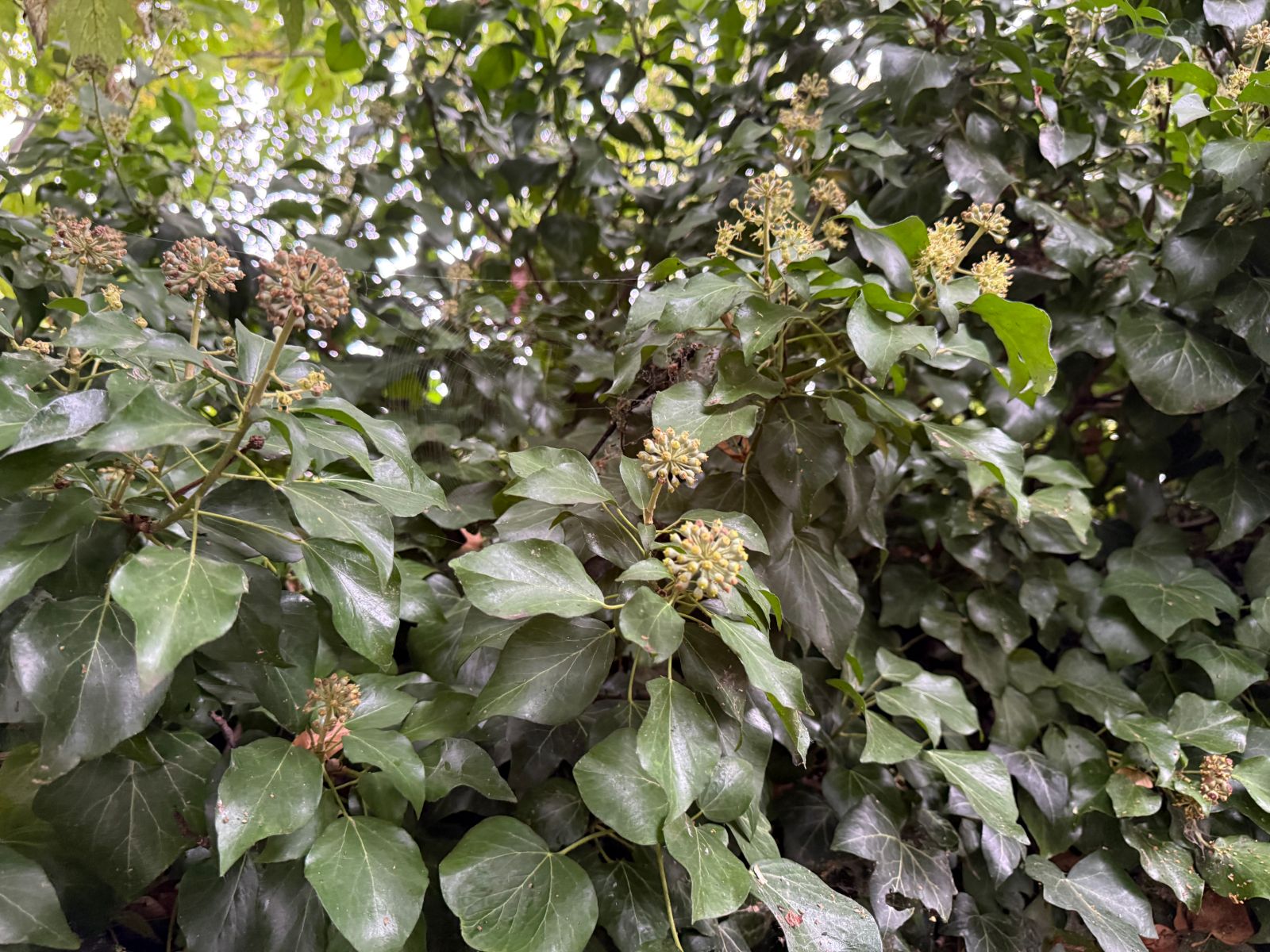
Pause beside flowering ivy on a mild autumn day. You might hear a hum before you spot the visitors: bees, hoverflies and wasps moving between its small, greenish-yellow flowers. As other flowers fade, ivy is still offering food.
And there’s more to come. Its dark berries ripen into winter, providing fat-rich food for blackbirds, thrushes and blackcaps when other supplies are running low. Leaving some mature ivy to flower and fruit can help birds through these leaner months. Woodland Trust
Those thick, evergreen leaves matter too. When surrounding branches are bare, ivy still offers places to hide, roost and shelter from the weather. Insects can overwinter among its growth, while birds such as wrens and robins may nest within the tangle of stems. A familiar green backdrop can hold a surprising amount of life. RHS
But if you’ve watched ivy climbing a wall or winding up a trunk, you may have wondered what it’s doing underneath.
Ivy on walls and fences
Existing cracks and loose mortar need more care. Roots can enter gaps and enlarge them, while stems can creep into gutters or beneath roof coverings. Check growth regularly and trim it away from these vulnerable areas.
On wooden fences, stems can thicken between slats and push them apart. Keep ivy within what the fence can support, especially if panels or posts are ageing. Avoid pulling established ivy forcefully from walls, as loose mortar or surface finishes may come away with it. RHS
Ivy on trees
Seeing ivy on a trunk doesn’t mean the tree is being strangled. Ivy isn’t a parasite: it takes water and nutrients through its own roots in the soil. Its clinging roots use bark for support without penetrating it.
Healthy mature trees usually cope well. Young trees, trees with sparse canopies and those already weakened may need closer attention. Heavy ivy can compete for light, add weight and catch the wind; dense growth can also hide decay. If you’re concerned about a tree’s condition, ask a qualified arborist to assess it. RHS
A little room to grow
If you have ivy growing somewhere suitable, try keeping a patch of mature growth, with space to flower and set berries. Check for active bird nests before pruning and leave nesting birds undisturbed.
Then take a few minutes to watch. Look for insects on the autumn flowers, birds picking berries in winter, or a quick movement disappearing between the leaves.